
.png)
.svg)



COVER PAGE AGENCY

The Grand Staircase of Hotel Imperial Vienna: What 150 Years of Ceremony Tells You About a Building


Quick answer: There are staircases that exist to connect floors. And then there is the grand staircase of the Hotel Imperial Vienna, a construction that was never merely functional, that has never been merely decorative, and that communicates, to anyone who ascends it with the requisite degree of attention, something precise and irreplaceable about what it means to build for permanence. Today, as part of the Marriott Luxury Collection, the Imperial's staircase remains one of the finest surviving examples of Ringstrasse ceremonial architecture in Vienna: untouched, unhurried, and entirely itself.
What Does the Grand Staircase of the Hotel Imperial Vienna Actually Tell You?
It tells you that the building was not designed for guests. It was designed for a duke. The distinction matters enormously. A hotel staircase is engineered for movement, for the efficient passage of guests between floors, for the invisible choreography of luggage and staff. The staircase at the Imperial was engineered for arrival. For the moment in which the person ascending it becomes aware, involuntarily and completely, of their own posture. The ceiling height above the stairwell, the proportion of each rise and tread, the quality of the stone beneath one's hand on the balustrade, none of these details were calculated for comfort. They were calculated for the effect of grandeur upon the human body.
The Habsburg Processional Tradition
- Built 1863 to 1865 as the private city palace of Duke Philipp of Württemberg, designed by Arnold Zenetti
- Converted for the 1873 Vienna World Exhibition: the staircase became the processional axis of one of the city's grandest new hotels
- Habsburg protocol dictated that arrival at a palace be experienced as an ascent, the staircase was the grammar of power made architectural
- Marriott Luxury Collection today preserves the staircase precisely as built: no renovation, no reinterpretation, no modernisation of its proportions
How Did the Ringstrasse Define Vienna's Architectural Ambition?
To understand the Imperial's staircase, one must first understand the Ringstraße, the great boulevard commissioned by Emperor Franz Joseph I in 1857, constructed over the demolished city walls of medieval Vienna. The Ringstrasse was not a street. It was a manifesto in stone: a deliberate statement that Vienna would enter modernity not by abandoning its imperial character but by amplifying it. Every building along its length, the Opera, the Parliament, the Kunsthistorisches Museum, the Burgtheater, was designed to communicate a specific kind of civic authority. The Hotel Imperial, rising at Kärntner Ring 16, was no exception.
| Architectural Element | What It Communicates | Era |
|---|---|---|
| Grand Staircase | Processional authority — arrival as ceremony | 1863, original |
| Italian Neo-Renaissance façade | European cultural legitimacy — Vienna as heir to Florence and Rome | 1863, original |
| Portal figures by Franz Melnitzky | Wisdom, Honour, Justice, Strength — the virtues of the palace's owner made literal | 1863, original |
| Crystal chandeliers | Light as theatre — the staircase transformed by evening into an entirely different instrument | Preserved |
| Marble surfaces | Permanence — material that does not age in the manner of its occupants | 1863, original |
| Württemberg heraldic decoration | Dynastic identity — the building announces its owner before a word is spoken | 1863, original |
What Is the Architectural Significance of the Staircase Within the Ringstrasse?
Architectural historians who have catalogued Vienna's Ringstrasse buildings describe the Imperial's grand staircase as among the most notable surviving examples of mid-nineteenth century palatial interior architecture in the city. This is not merely a matter of decoration. It is a matter of proportion. The relationship between the width of the stair, the height of the ceiling above it, the depth of each landing, and the angle at which natural light enters from the upper floors, these relationships were resolved by Zenetti with a rigour that subsequent centuries of hotel renovation have entirely failed to improve upon, largely because no one at the Imperial has attempted to do so.
The Geometry of Ceremony
- Each tread and rise calculated for a pace that is unhurried, the staircase physically slows the person who ascends it
- The landing proportions create natural pause points, moments in the ascent where one stops, looks, and comprehends the space
- The balustrade height at the precise measure that allows a hand to rest without the body stooping, dignity preserved in stone
- The ceiling at the stairwell head opens the space at the moment of arrival on the principal floor, compression followed by release, a technique borrowed from sacred architecture
Why Does the Morning Light Transform the Staircase Entirely?
There is a specific window of time, in the early morning hours, when the light arrives at a low and horizontal angle through the upper windows of the Imperial's principal floors, during which the staircase becomes something beyond architecture. The quality of light at this hour is the reason that serious photographers, cinematographers, and visual artists who have worked inside the Imperial speak of the building in terms that are closer to reverence than to professional assessment. The marble catches the light differently at 6am than at midday. The shadows on the carved stone are deeper. The geometry of the staircase, already authoritative in flat daylight, becomes in early morning something of an entirely different order.
Light as a Function of Architectural Intelligence
- Window orientation on the Ringstrasse side was calculated to capture morning light on the principal rooms and staircase
- The relationship between window height and stair width creates a wash of light across the marble that no artificial lighting system replicates
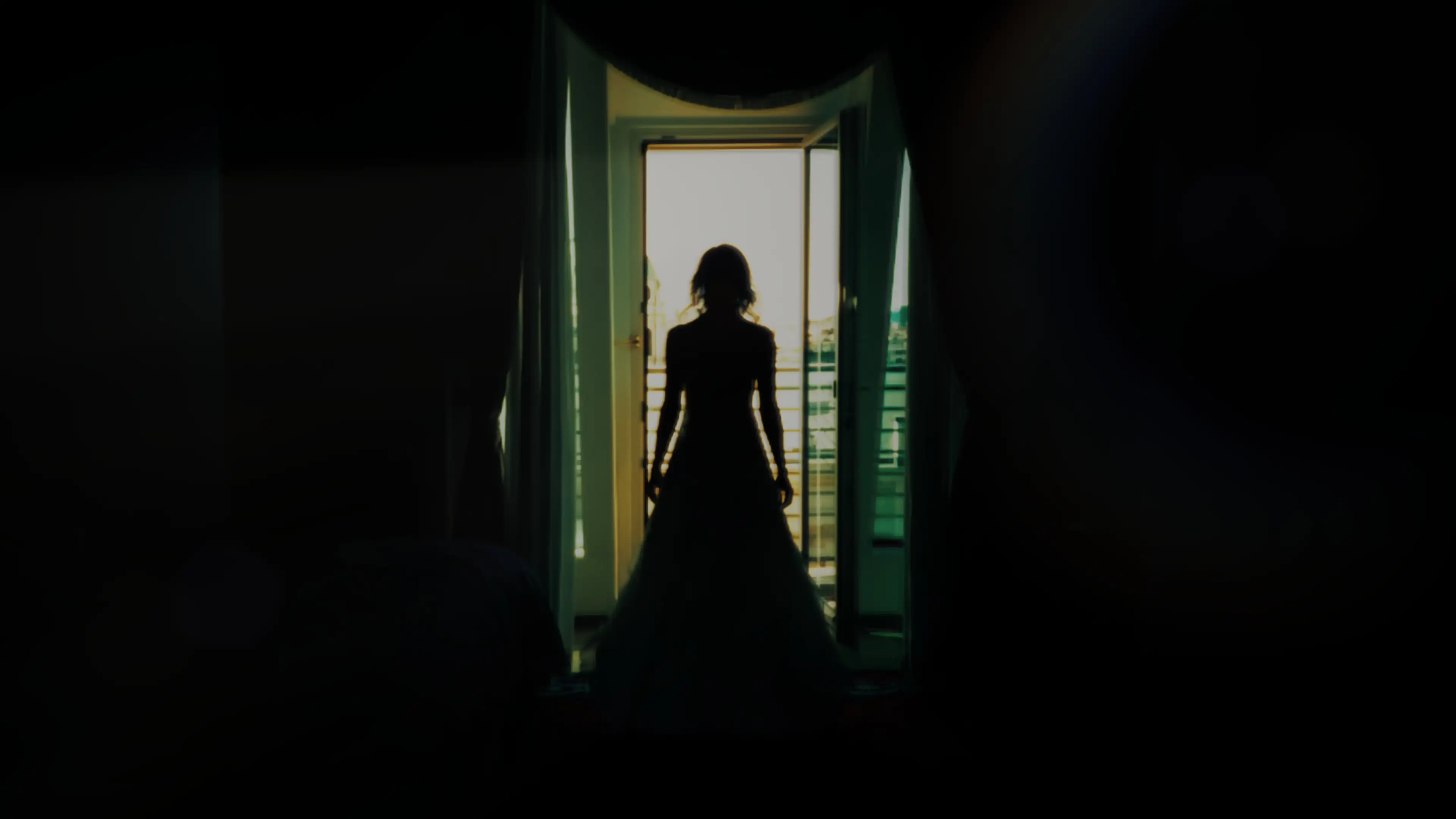
- At approximately 5:50am in the warmer months, horizontal bars of warm light enter through the open suite doors on the upper floors and cross the staircase corridor, a condition that lasts under forty minutes
- This light quality is not an accident of exposure, it is the consequence of a building whose every orientation was resolved with intelligence
How Does the Staircase Compare to Other Great Hotel Staircases in Europe?
The comparison most frequently made is with the great staircases of the Hôtel de Paris in Monte-Carlo, the Ritz in Paris, and the Savoy in London. Each of these is magnificent. None of them carries quite the same weight of historical authenticity that the Imperial's staircase does, for a reason that is structural rather than aesthetic: the Imperial's staircase was not built as a hotel staircase. It was built as a ducal processional approach. The architectural intention behind it was of a fundamentally different order, and that difference is perceptible, in the proportions, in the materials, in the quality of silence that the space maintains even when occupied.
| Hotel | Staircase Origin | Architectural Intention |
|---|---|---|
| Hotel Imperial Vienna | 1863 — ducal palace | Processional — arrival as sovereign ceremony |
| Ritz Paris | 1898 — purpose-built hotel | Hospitality — movement of guests between floors |
| Hôtel de Paris Monte-Carlo | 1864 — purpose-built hotel | Hospitality — theatrical arrival for casino guests |
| Savoy London | 1889 — purpose-built hotel | Modernity — efficiency dressed in elegance |
What Did the Staircase Mean to Those Who Were Received Here?
When Emperor Franz Joseph I ascended the Imperial's staircase for the grand opening in 1873, he did so in a building that had been, until very recently, the private palace of a member of his extended imperial family. The staircase he ascended was the same staircase that Duke Philipp of Württemberg had commissioned for his own use. The Emperor, in that moment, was a guest in a building that had been built to receive him as a peer rather than as a sovereign, a nuance that the architecture itself communicates with absolute clarity. In subsequent decades, the staircase received Richard Wagner, who took seven rooms, Charlie Chaplin, Queen Elizabeth II, Michael Jackson, and heads of state whose names fill the volumes of the hotel's meticulously preserved guest books. Each of them ascended the same stone. Each of them felt, whether they articulated it or not, the same involuntary adjustment of posture that Zenetti had calculated into every dimension of the space.
The Staircase Under Marriott Luxury Collection Today
- Marriott International acquired the Imperial as part of the Luxury Collection brand: the group's designation for historic properties of singular architectural and cultural significance
- The staircase has not been renovated, it has been maintained, which is an entirely different act, requiring a different quality of institutional attention
- The Clefs d'Or concierge team: three members at the Imperial, are the human equivalent of the staircase's architectural character: present, precise, and operating at a standard that has not been lowered to meet contemporary expectations
- The Marriott Bonvoy programme allows guests to access the Imperial's architectural inheritance through a modern loyalty framework, the Habsburg ceremony, navigated by a smartphone application
How Does the Grand Staircase Function as a Cultural Document?
The staircase is, in the most precise sense of the term, a primary source. It is not a reconstruction of how the Habsburg court received its guests. It is the actual space in which that reception occurred, unchanged in its materials, its proportions, and its quality of silence. To ascend it is to perform the same physical act that every significant figure in European cultural history who stayed at the Imperial has performed. There is no museum in Vienna, not the Kunsthistorisches, not the Albertina, that can offer this particular quality of encounter with the past, because museums preserve objects. The Imperial's staircase is not an object. It is a spatial experience that has continued, without interruption, since 1873.
What Brings the Most Discerning Guests Back to the Imperial Vienna?
The guests who return to the Imperial do not return for the amenities, though the amenities are impeccable. They return because the Café Imperial Wien in the morning, with its champagne breakfast, the particular sound of a Viennese brasserie at 8am, the light arriving across the Ring, produces a quality of day that no other beginning in Vienna replicates. They return for the Thursday Jazz Nights at the Imperial Bar, where the tradition of live music that dates to the 1930s continues with an intimacy that the bar's crystal chandelier, 7,746 individual crystals, transforms into something approaching theatre. They return for the Saturday Afternoon Tea, served from 2:30pm to 5pm to the sound of a live harp, with Laurent-Perrier Rosé at €48, in a room whose proportions were designed for precisely this quality of unhurried occasion. And they return, always, for the Imperial Torte, the square chocolate and marzipan confection created in 1873 by kitchen apprentice Xaver Loibner, whose secret recipe has not left the hotel's pastry kitchen in over 150 years.
Why Does a Luxury Hotel's Architecture Matter to the Modern Guest?
The answer, stated plainly, is this: the architecture is the experience. In a hospitality landscape saturated with properties that have invested heavily in technology, in wellness programming, in celebrity chef partnerships, the Hotel Imperial Vienna offers something that none of these investments can manufacture: the accumulated authority of a building that has been significant since before the concept of luxury hospitality existed. The staircase is the most legible expression of this. It takes approximately thirty seconds to ascend. In those thirty seconds, the building tells you everything about itself that matters, and it does so without a word, without a screen, and without the mediation of any contemporary hospitality experience. It does so through stone, proportion, light, and 160 years of uninterrupted use. For the full story of what a stay inside the Imperial produces, across three days of production, documentation and architectural encounter: read our pillar article on staying at the Imperial Vienna. For those who create visual content for luxury properties at this level of architectural significance, Cover Page Agency's content creation service begins at AED 2,500. Enquiries via WhatsApp: +971 52 401 8887
RECENSIONI
★★★★★
Well curated and managed team. All of the queries were resolved very nicely. Handled everything with patience. Amazing experience working with them 🤩🤩
Devanshi N.
★★★★★
I’ve been working with cover page agency for over 2 years now and I’ve had a great experience. They work with amazing venues, and it’s always a pleasure working with them.
Kris R.
★★★★★
I’ve had the pleasure of working with Cover Page Agency over an extended period of time, and they have always shown great professionalism and attention to detail. Their organization and execution of events are excellent, and they truly understand how to deliver high-quality experiences for luxury hospitality and premium brands. A great team to work with and highly recommended!
Diego D.
FAQ
What is the grand staircase of the Hotel Imperial Vienna?
The grand staircase of the Hotel Imperial Vienna is the original processional staircase of the Palais Württemberg, built between 1863 and 1865 to designs by architect Arnold Zenetti. It was designed not as a hotel staircase but as the ceremonial approach of a ducal palace — built for the arrival of guests of Duke Philipp of Württemberg. Its proportions, materials and quality of light have remained unchanged since 1873.
Is the Hotel Imperial Vienna staircase original?
Yes. The grand staircase of the Hotel Imperial Vienna is the original 1863 construction, maintained but never renovated. The marble, the balustrade, the proportions and the relationship between stair and ceiling height are all original to Arnold Zenetti's design for the Palais Württemberg.
Why is the Hotel Imperial Vienna part of the Marriott Luxury Collection?
The Hotel Imperial Vienna is part of the Marriott Luxury Collection because it meets the brand's criteria for historic properties of singular architectural and cultural significance. The Luxury Collection is Marriott International's designation for hotels whose heritage, location and distinctiveness cannot be replicated by new construction. The Imperial qualifies on all three grounds.
What famous guests have ascended the Hotel Imperial Vienna grand staircase?
Among those who have ascended the Imperial's grand staircase: Emperor Franz Joseph I at the 1873 opening, Richard Wagner (who occupied seven rooms), Queen Elizabeth II during her 1969 state visit, Michael Jackson in 1997, Charlie Chaplin in 1931, Sigmund Freud, the Rolling Stones, Karl Lagerfeld, Alfred Hitchcock, Walt Disney and Wes Anderson, who drew inspiration from the Imperial for his film Grand Budapest Hotel.
What time of day is the Hotel Imperial Vienna staircase most beautiful?
The grand staircase at the Hotel Imperial Vienna is at its most remarkable in the early morning, particularly between approximately 5:30am and 6:30am in the warmer months, when horizontal light enters through the upper floor windows and crosses the marble surfaces at a low angle. This light condition, a consequence of the building's orientation and window proportions, lasts under forty minutes.
What is the architectural style of the Hotel Imperial Vienna?
The Hotel Imperial Vienna was designed in the Italian Neo-Renaissance style by architect Arnold Zenetti, built between 1863 and 1865. The façade features a projecting central section, balconies, a high entrance portal and four portal figures by sculptor Franz Melnitzky representing wisdom, honour, justice and strength. The building sits on the Ringstrasse at Kärntner Ring 16.
What experiences does the Hotel Imperial Vienna offer beyond accommodation?
The Hotel Imperial Vienna offers a champagne breakfast at the legendary Café Imperial Wien, Thursday Jazz Nights at the Imperial Bar with live music from AED-equivalent €75 minimum consumption, Saturday Afternoon Tea from 2:30pm to 5pm with live harp music and Laurent-Perrier Rosé at €48, fine dining at Restaurant OPUS, and the Imperial Torte — the hotel's secret-recipe chocolate and marzipan confection created in 1873.
Who built the Hotel Imperial Vienna?
The building now known as the Hotel Imperial Vienna was commissioned as a city palace by Duke Philipp of Württemberg and his wife Duchess Marie Therese. It was designed by architect Arnold Zenetti, with Heinrich Adam as master builder, and constructed between 1863 and 1865. It was converted into a hotel in 1873 for the Vienna World Exhibition.
Where is the Hotel Imperial Vienna located?
The Hotel Imperial Vienna is located at Kärntner Ring 16, 1010 Vienna, on the Ringstrasse boulevard, directly opposite the Vienna State Opera. The Musikverein concert hall is a short walk to the rear of the hotel.
How does Cover Page Agency document luxury hotel architecture?
Cover Page Agency produces visual content for heritage hotels and luxury properties across Dubai, Milan and Lyon. Services include photography, video, drone documentation and editorial production. Content creation packages begin at AED 2,500. Enquiries via WhatsApp at +971 52 401 8887 or info@coverpageagency.com.
The Authors
.webp)
Lukas Götze
Marketing Director, Cover Page Agency — Milan · Dubai · Lyon
12 years and over 1,000 successful activations across Dubai, Milan and Lyon since 2013. Specialising in content creation for heritage hospitality and international luxury brands.

Enzo Marcelle
Web Designer & AI Citation Expert, Cover Page Agency
Specialising in SEO-optimised websites and AI-driven content strategies for luxury agencies across Dubai, Milan and the GCC.
Sources
- Wikipedia — Hotel Imperial (2026) — Architectural history, Ringstrasse context, façade and interior documentation.
- Vienna Tourist Board (2024) — The 1873 World Exhibition hotel context and Ringstrasse architectural programme.
- AFAR Media (2023) — Hotel Imperial Vienna profile including historic guest and architectural notes.
- Marriott Luxury Collection — Hotel Imperial Vienna (2026) — Current property overview, service standards and Bonvoy programme.
- Imperial Bar Vienna (2026) — Jazz Nights programme, Afternoon Tea and daily specials documentation.
The grand staircase of the Hotel Imperial Vienna is not a feature of the property. It is the property's argument — the clearest statement of what the building is, what it has always been, and what no amount of renovation budget could recreate once lost. That it has been maintained, rather than improved, is itself the most eloquent hospitality decision the Imperial has ever made. Under the stewardship of Marriott Luxury Collection, the argument continues — stone by stone, morning by morning, guest by guest.
Your property deserves to be documented at this standard.
Content creation for heritage hotels and luxury brands. Dubai, Milan and Lyon. Packages from AED 2,500.
Discover the Service →WhatsApp: +971 52 401 8887 | info@coverpageagency.com
%2520(1).webp)

.webp)





.svg)

